
2027 Condominium Association Budget Planning: How Submetering and Utility Billing Can Help Control Costs
October 23, 2026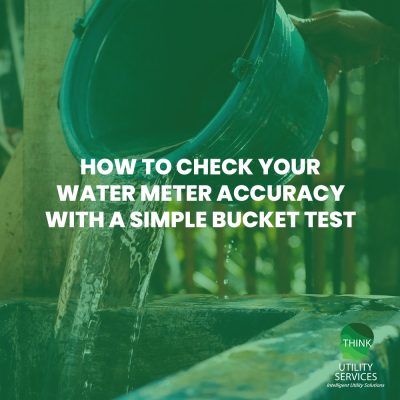
How to Check Your Water Meter Accuracy With a Simple Bucket Test
Water usage plays an important role in managing monthly utility costs. Whether you own a home, manage an apartment community, or oversee a condominium association, understanding how your water meter measures consumption can help you identify potential billing issues, detect hidden leaks, and avoid unnecessary expenses.
One simple way to check your water meter's accuracy is with a bucket test. By measuring a known volume of water and comparing it with the amount registered on your meter, you can identify potential discrepancies and determine whether further inspection is needed.
Although a bucket test cannot replace professional meter calibration, it provides a practical starting point for understanding water consumption and investigating unexpected utility bills.
What Is a Water Meter Bucket Test?
A water meter bucket test compares a measured volume of water, typically five or ten gallons, with the amount recorded by your meter. Using a calibrated bucket allows you to check whether the meter registers approximately the expected amount of water.
Before starting, identify the units displayed on your meter. Depending on the model, your meter may measure consumption in gallons, cubic feet, or cubic meters. Some meters also display consumption in increments too large to make a small bucket test useful without reading a secondary dial or low-flow indicator.
Important: A bucket test is a preliminary diagnostic check, not a certified meter accuracy test. Results depend on the accuracy of your measured water volume, the meter's display resolution, and the conditions under which you conduct the test.
Water Meter Conversion Chart: Gallons to Cubic Feet
Many residential and multifamily water meters measure consumption in cubic feet rather than gallons. Understanding the conversion helps you compare the amount of water used with the reading shown on your meter.
| Measured Volume | Gallons | Cubic Feet | Liters |
|---|---|---|---|
| 1 US gallon | 1.0 | 0.1337 | 3.785 |
| 5 US gallons | 5.0 | 0.668 | 18.93 |
| 10 US gallons | 10.0 | 1.337 | 37.85 |
| 1 cubic foot | 7.4805 | 1.0 | 28.32 |
Quick reference: Five gallons equals approximately 0.67 cubic feet. Ten gallons equals approximately 1.34 cubic feet. One cubic foot of water equals approximately 7.48 US gallons.
These conversions are useful when your meter measures water in cubic feet, but your bucket measures gallons.
How to Perform a Water Meter Bucket Test
Follow these five steps to check whether your water meter registers a known volume of water.
Step 1: Locate Your Water Meter and Identify the Display
Locate the water meter or submeter you want to test. Make sure it serves the property, building, or individual unit you intend to evaluate.
Water meters generally use one of two display types:
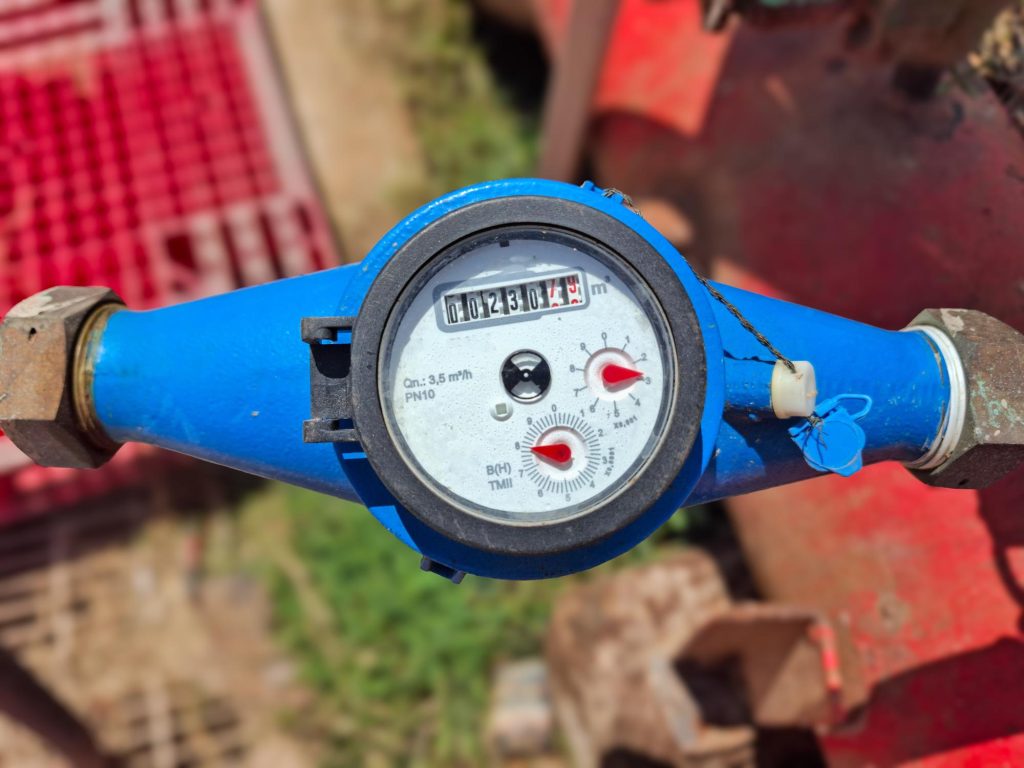
Mechanical meters: These typically have a numerical register, a rotating sweep hand, and sometimes a small leak detector shaped like a triangle, star, or wheel.
Digital meters: These use an electronic display to show consumption, flow rate, or other information. Some models require a button press or a light source to activate the screen.
Check the meter's face, markings, or manufacturer documentation to determine its measurement units and the value represented by its smaller indicators.
Step 2: Turn Off Water Fixtures and Record the Initial Reading
Before testing, turn off water fixtures and appliances connected to the meter. Check that washing machines, dishwashers, irrigation systems, ice makers, and other automatic water users are not operating.
Next, record the initial meter reading.
For mechanical meters, pay attention to both the main numerical register and any smaller measurement indicators.
How to read the sweep hand: Many mechanical meters have a rotating dial that measures smaller increments than the main register. The dial may measure gallons, tenths of a gallon, cubic feet, or another increment, depending on the meter model. Read the markings on the meter to determine what each revolution or division represents.
Some meters also include a leak detector indicator, often shaped like a small triangle, star, or wheel. This indicator may move when water passes through the meter at low flow rates.
If the leak indicator continues moving while all water fixtures are off, investigate the possibility of a leak or another source of water consumption. Confirm that automatic appliances and irrigation systems are not using water before concluding that a leak is present.
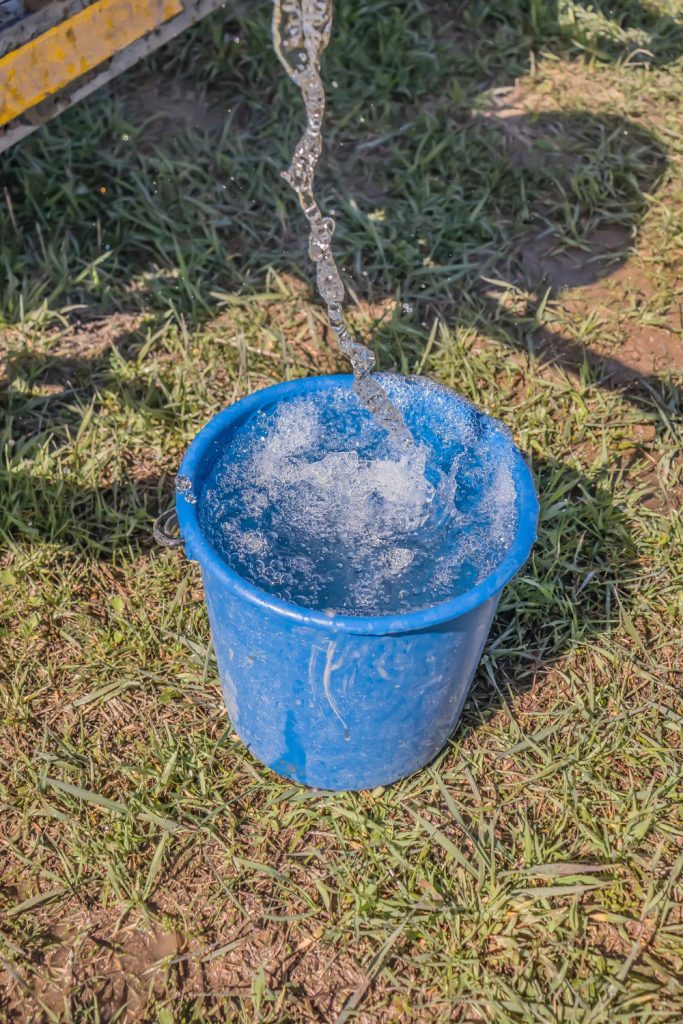
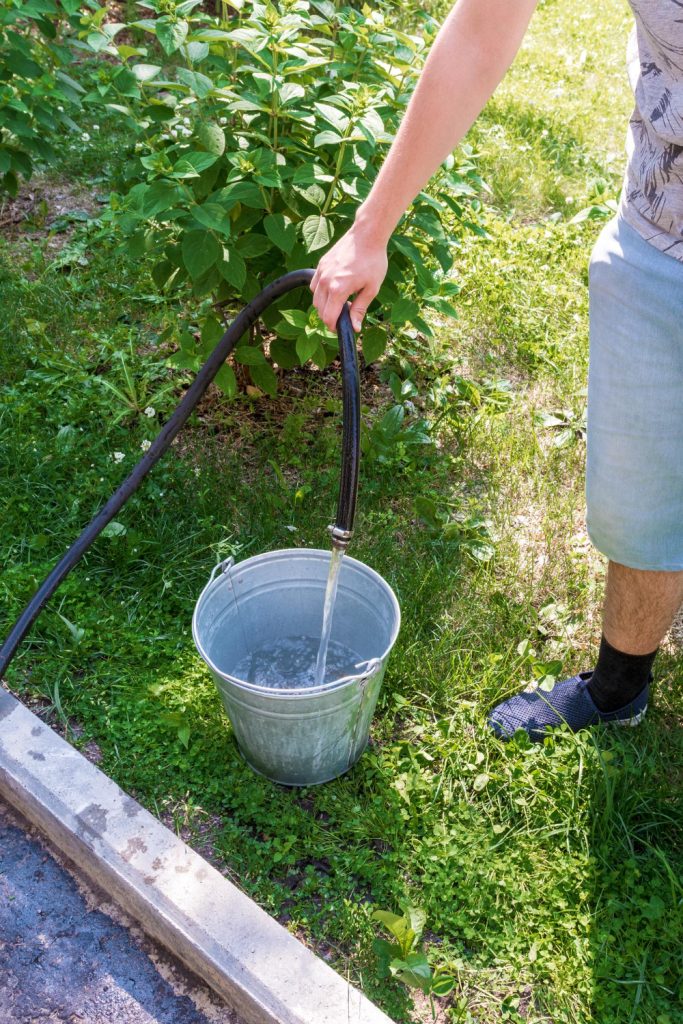
Step 3: Fill a Measured Five-Gallon Bucket
Use a bucket with verified five-gallon markings or another reliable method of measuring the water volume.
Open a faucet supplied by the meter being tested.
Fill the bucket to the five-gallon mark, taking care to avoid splashing or spilling water.
Turn off the faucet completely.
If the meter's display does not show a sufficiently small increment, consider repeating the process with a total of ten gallons.
A ten-gallon test can make the results easier to interpret, particularly when testing meters that display consumption in cubic feet.
For the best comparison, use a steady flow and ensure that the bucket's measured capacity is reliable.
Step 4: Record the Final Meter Reading
Return to the meter and record the new reading. For a mechanical meter, check the sweep hand and any other small indicators, as well as the main register.
Calculate the difference between the final and initial readings:
Water registered = Final reading − Initial reading
Compare the difference with the volume of water collected in the bucket.
If your meter displays gallons, a five-gallon test should register approximately five gallons, provided the display has sufficient resolution.
If your meter displays cubic feet, five gallons should correspond to approximately 0.668 cubic feet. A ten-gallon test should correspond to approximately 1.337 cubic feet.
Step 5: Compare the Results and Check the Meter's Resolution
Your results will depend on how precisely the meter displays water consumption.
For example:
Meters displaying gallons: A five-gallon test should register approximately five gallons if the display records small enough increments.
Meters displaying cubic feet: Five gallons equals approximately 0.668 cubic feet, while ten gallons equals approximately 1.337 cubic feet.
Meters with large numerical increments: The main register may not visibly change after a five-gallon test. Use the sweep hand or another indicator that measures smaller volumes.
Meters with digital displays: Check whether the display shows fractional consumption, a low-flow indicator, or a separate flow-rate screen.
Do not assume that every full revolution of a mechanical sweep hand represents one gallon or one cubic foot. The value varies by meter model and is often printed directly on the meter face.
If the display cannot show the expected change, the result is inconclusive rather than proof that the meter is inaccurate.
What Should You Do If Your Water Meter Reading Does Not Match?
If the recorded consumption differs noticeably from the measured bucket volume, repeat the test before concluding.
Use the following checklist to investigate potential problems:
Repeat the test: Try a ten-gallon test to reduce the relative impact of small measuring errors.
Check for other water use: Make sure irrigation, ice makers, water softeners, and other automatic systems are not operating during the test.
Verify the bucket volume: Confirm that the bucket's markings are accurate and that you collected the intended amount of water.
Review the meter's display: Check the units, decimal places, sweep hand, and measurement increments.
Confirm the meter assignment: In apartments and condominiums, verify that the meter corresponds to the correct unit.
Request a professional inspection: If the discrepancy persists, contact your water provider, property manager, or submetering service company.
A bucket test can identify a potential issue, but it cannot establish the meter's certified accuracy. A qualified professional can determine whether a more precise test, inspection, or repair is appropriate.
How to Check Your Water Bill for Unusual Usage
Testing a water meter is only one part of managing water consumption. Reviewing your utility bill regularly can help you identify unexplained increases and investigate potential problems before they become more expensive.
Compare your current bill with previous billing periods. When possible, review the same season from the previous year to account for changes in weather, irrigation, and occupancy.
Look for these common causes of unexpected water consumption:
Leaking toilets: A worn flapper or faulty fill valve can allow water to run continuously, even when the toilet is not in use.
Irrigation problems: Broken sprinkler heads, damaged pipes, or malfunctioning valves can waste significant amounts of water.
Dripping faucets and fixtures: Small leaks can accumulate over time.
Underground plumbing leaks: Leaks in supply lines may go unnoticed until water consumption or property damage increases.
Meter reading errors: Incorrect readings or incorrect meter-to-unit assignments can affect billing.
Billing calculation errors: Incorrect conversion factors, billing multipliers, or other calculation issues can produce discrepancies.
If your bill increases unexpectedly, investigate the cause before assuming the meter is defective.
You can also check the meter when all water fixtures are turned off. If the meter continues registering consumption, investigate whether a leak or another source of water use is responsible.
How Accurate Water Metering Can Help Save Money
Accurate water measurement helps property owners and residents understand how much water they use and where conservation efforts may be worthwhile.
For multifamily properties, individual submeters provide a clearer picture of water consumption in apartments, condominiums, and other separately metered spaces.
When combined with regular meter maintenance and accurate utility billing, submetering can help property managers identify unusual consumption, investigate leaks, and make informed decisions about utility expenses.
Benefits include:
Better consumption tracking: Monitor usage and identify unusual changes.
Earlier leak detection: Investigate continuous or unexpected water flow.
More transparent billing: Use meter readings to support accurate, usage-based utility billing.
Improved conservation: Give residents and property managers better information about water consumption.
Stronger expense management: Identify opportunities to reduce unnecessary water use and investigate billing discrepancies.
Actual savings depend on the property's plumbing, resident behavior, metering infrastructure, billing practices, and conservation measures. Accurate metering alone does not guarantee lower water consumption, but it provides useful information for managing it.
Why Water Meter Maintenance Matters for Multifamily Properties
For apartment communities, condominium associations, HOA boards, and commercial properties, water metering plays an important role in managing utility expenses.
A properly maintained submetering system helps property managers track consumption at the individual-unit level. Accurate readings also support utility billing and help identify discrepancies that may otherwise go unnoticed.
Routine inspections, timely repairs, and periodic accuracy checks help property owners address potential problems before they become larger operational or billing concerns.
Property managers should also keep records of unusual meter readings, inspection results, repairs, and billing adjustments. These records can help resolve questions about consumption and provide a clearer history of the property's utility management.
Take Control of Your Water Usage
A five-gallon bucket test is a straightforward way to begin checking your water meter's performance. By comparing a known volume of water with the meter's recorded consumption, you can identify potential discrepancies and determine whether further investigation is necessary.
For meters that do not display small changes clearly, a ten-gallon test or the use of a properly marked sweep hand may provide a more useful comparison.
Combining periodic meter checks with regular utility bill reviews can help property owners and residents identify unusual consumption, investigate possible leaks, and make informed decisions about water use.
Think Utility Services provides water submetering, submeter repair, meter installation, and utility billing solutions for multifamily properties and commercial real estate throughout the United States. Our services help property owners and managers monitor water consumption, address metering concerns, and manage utility billing more effectively.
Explore our water submetering services, submetering repair services, and utility billing solutions to learn more about managing water consumption at your property.